
401 North Ave Ste. 9, Villa Park, IL 60181

Can You Get Clear Aligners with Dental Crowns or Implants?

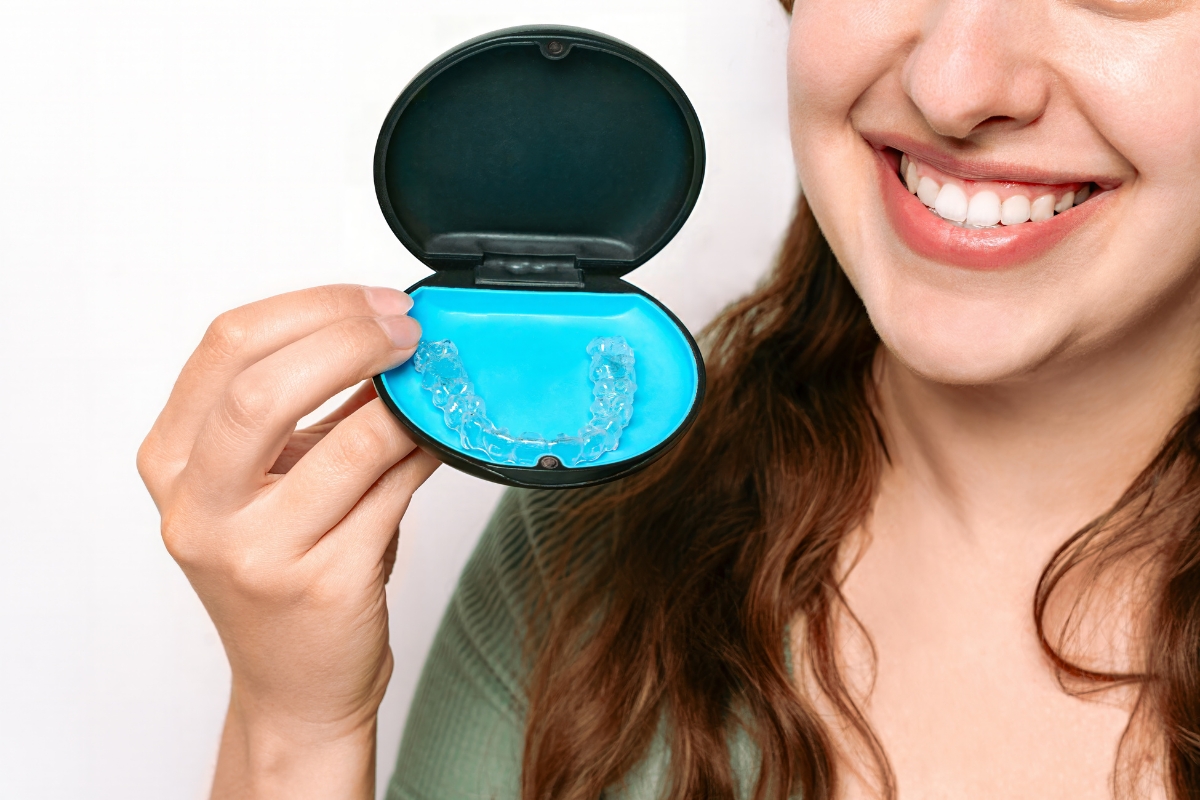
Orthodontic technology has evolved to the point where a history of restorative work no longer prevents you from getting your ‘dream’ smile. Many adults hesitate to seek treatment because they worry that a titanium implant or a porcelain crown might prevent their teeth from moving correctly. This is a logical concern, as these restorations are designed to be permanent and, in the case of implants, are fused directly into the jawbone.
However, having existing dental work does not automatically disqualify anyone from the benefits of modern orthodontic systems. We find that with careful planning and digital mapping, we can move the natural teeth around these fixed oral tools to create a balanced, functional bite.
Managing Crowns and Bridges During Treatment
Crowns are different from implants because they sit on top of a natural root. Since the root is still attached to the periodontal ligament, a crowned tooth can be moved just like any other tooth. The main challenge we address is the porcelain surface, which is very smooth and can make it difficult for orthodontic attachments to adhere. To solve this, we use specialized bonding agents formulated for ceramic surfaces. This ensures the aligner has the grip it needs to rotate or tip the tooth into the correct alignment without compromising the integrity of the crown.
Dental bridges are unique because they link multiple teeth. Moving one tooth in a bridge effectively means moving the entire unit, which is not always ideal. In these cases, we evaluate whether to move the bridge as a single block or, in some instances, temporarily separate the units to allow for more precise movement of individual units. Patients often visit our office in Villa Park to discuss clear aligners to correct crowding around an old bridge. We focus on the restoration’s long-term stability while prioritizing the patient’s aesthetic goals.
The Role of Digital Planning in Complex Cases
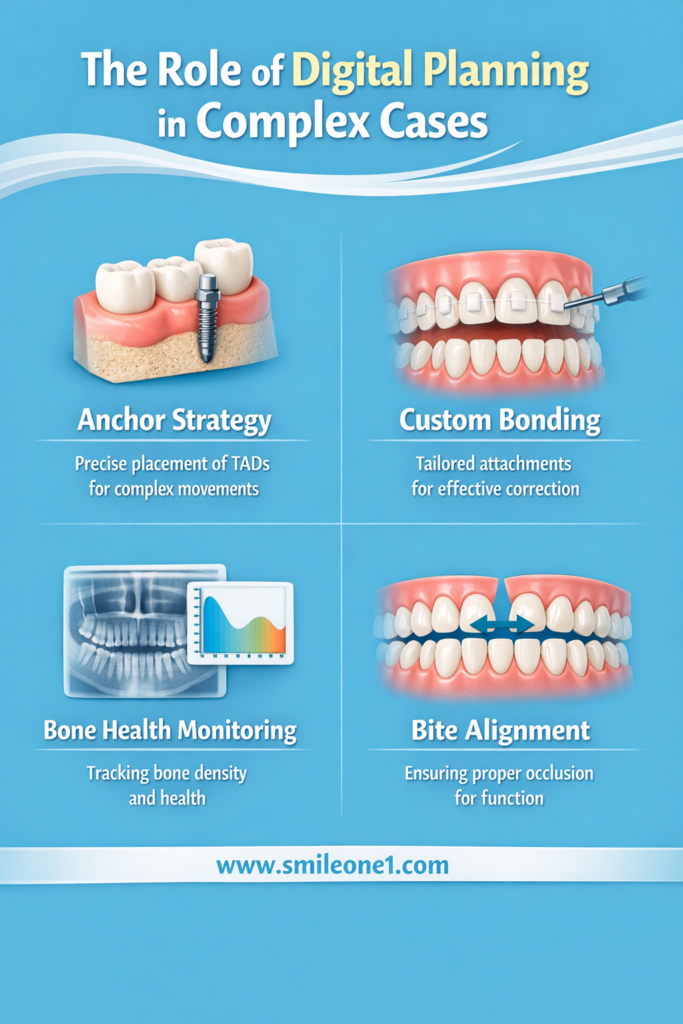
Precision is the backbone of successful orthodontics when restorations are involved. We utilize 3D scanning technology to create a digital blueprint of the entire mouth. It can simulate every micro-movement before manufacturing the first tray. By seeing the predicted path of each tooth, we can avoid placing undue stress on an implant or a delicate crown. This level of foresight is essential for residents who want to maintain their investment in past dental work while pursuing a more confident smile.
- Anchor Strategy: Using stationary implants to provide leverage for moving stubborn natural teeth.
- Custom Bonding: Utilizing medical-grade adhesives to ensure aligner attachments stay secure on porcelain surfaces.
- Bone Health Monitoring: Checking the density around implants to ensure they remain stable during the shift of neighboring teeth.
- Bite Alignment: Ensuring the new position of natural teeth doesn’t create “heavy” biting spots on existing crowns.
Why Alignment Matters for Restoration Longevity
Straightening your teeth is about more than how they look; it is a vital part of preventive care. Crowded or rotated teeth make it significantly harder to clean around the margins of a crown or the base of an implant.
This can lead to localized gum disease or “peri-implantitis,” which can cause a restoration to fail prematurely. By opting for clear aligners in Villa Park, you are making it easier to maintain these high-value restorations for the rest of your life.
A well-aligned smile distributes the force of your bite evenly, preventing the cracks and chips that often occur when teeth hit each other at the wrong angles during chewing.
Your past dental work shouldn’t prevent you from having the smile you’ve always wanted. By combining modern digital technology with a deep understanding of dental anatomy, we can create a treatment plan that respects your dental history and your future dental health.
Whether you are walking through the shops at Villa Park Town Center or heading to a local event, you deserve to feel completely confident in your smile. Contact SmileOne today to schedule your consultation.
People Also Ask
What happens if I need a new crown during aligner treatment?
We generally recommend completing any major restorative work before starting your trays. If a crown breaks during treatment, the new one must be shaped exactly like the old one to ensure the aligners still fit. If the shape of your teeth changes significantly, we may need to rescan them and order a new series of trays to accommodate the new restoration.
Can aligners cause my dental implant to fail?
No, as long as the implant has fully integrated with the bone and a professional carefully designs the orthodontic plan, treatment remains safe. We do not attempt to move the implant itself, so the pressure is directed only toward the natural teeth. This targeted approach protects the implant while improving the health of the surrounding gum tissue.
Are there specific cleaning tools I should use for aligners and crowns?
Maintaining hygiene is simpler with removable trays. We suggest using a soft-bristled brush to clean around the gumline of your crowns and implants after every meal. Using an interdental cleaner or a water flosser effectively removes debris that can become trapped between the aligner and your restorations.
Will my insurance cover aligners if I already have implants?
Insurance coverage typically depends on your specific orthodontic benefit rather than your dental history. Most plans that cover adult orthodontics will apply the benefit regardless of whether you have crowns or implants, but we always verify your specific policy to provide a clear picture of your benefits.
